
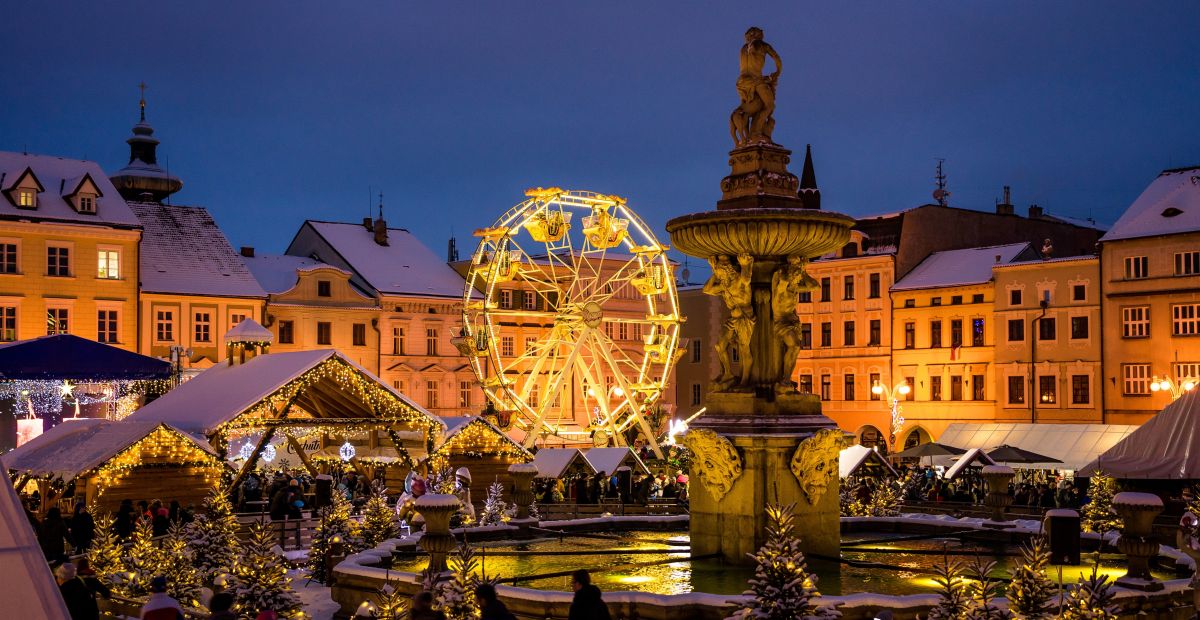
Vienna has its imperial squares, Prague has its Gothic rooftops, and Strasbourg has spent decades perfecting the business of looking like a Christmas postcard. Every December, millions of travelers descend on these familiar destinations, following much the same itinerary: wooden chalets, mulled wine, gingerbread and an obligatory photograph beneath an enormous Christmas tree.
But Europe’s festive season has a much more interesting side. In medieval Baltic towns, Christmas trees come with centuries-old rivalries. In the Netherlands, shoppers descend into underground caves to browse Christmas stalls. In Romania, Transylvanian squares become illuminated winter stages, while in Sweden, a century-old Christmas market keeps old rural traditions alive. Even Istanbul has joined the winter festivities, with a Christmas-inspired market in a country where December 25 is not a national holiday.
For American travelers looking beyond the traditional Central European circuit, these 12 destinations offer something different. Some have extraordinary architecture, others preserve fascinating customs, and a few have found rather unusual ways to celebrate the season. Ranked by their visual appeal, atmosphere and distinctive character, here are the European Christmas markets worth discovering this year.
1. Tallinn, Estonia: A Medieval Christmas Fairytale with a 600-Year-Old Story
There are beautiful Christmas markets, and then there is Tallinn in December. The Estonian capital seems almost suspiciously well suited to the season, with its medieval towers, narrow cobblestone streets, Gothic buildings and steep rooftops that occasionally disappear beneath a layer of snow. At the center of it all, Town Hall Square (Raekoja plats) hosts a Christmas market that looks as though it has been assembled by someone with an unusually generous imagination.
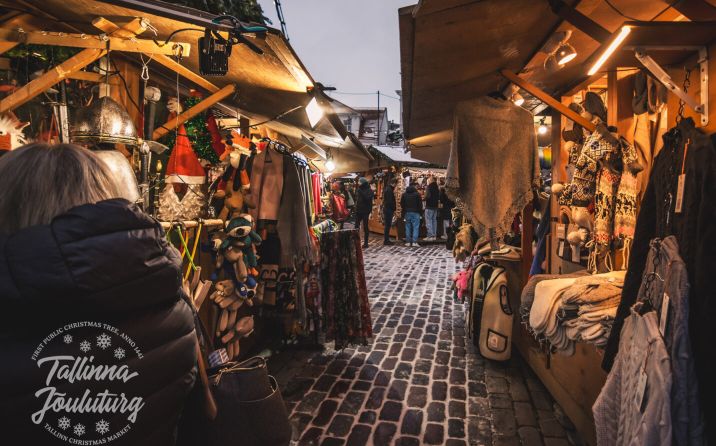
Its most interesting feature, however, is the Christmas tree. Tallinn traces its public Christmas tree tradition to 1441, when the Brotherhood of Black Heads, an association of unmarried merchants and shipowners, reportedly erected a tree in the square. The city considers this the first documented public Christmas tree in Europe. The market brings together Estonian craftspeople, festive food and seasonal entertainment. Look for black pudding, sauerkraut, gingerbread and woolen clothing made by local artisans. The 2026 market runs from November 20 to January 6, 2027, making it one of the longer festive events on this list. Find the program at the official Tallinn Christmas Market website.
2. Valkenburg, Netherlands: Christmas Shopping Underground
Valkenburg has a geographical advantage that few other European Christmas destinations can match: it has caves. Located in the southern Dutch province of Limburg, close to Maastricht, this small town transforms its underground marlstone corridors into one of Europe’s most unusual Christmas shopping experiences. Rather than wandering between wooden stalls in a public square, visitors descend beneath the town and discover illuminated tunnels filled with festive decorations, miniature Christmas scenes and market vendors.
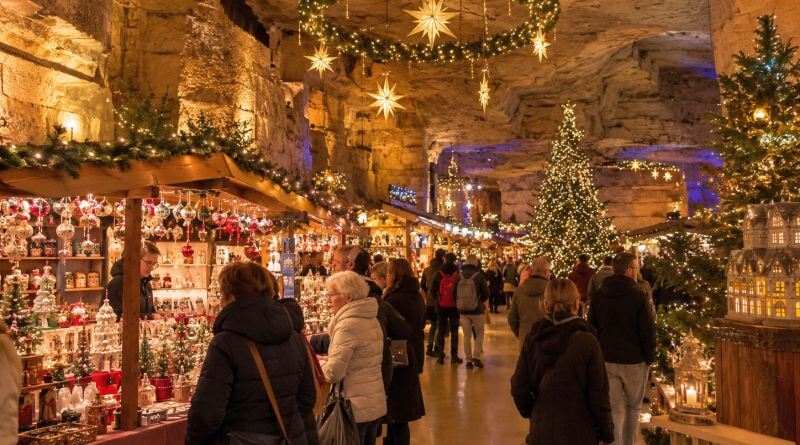
The two main attractions are the Municipal Cave (Gemeentegrot) and the Velvet Cave (Fluweelengrot), the latter situated beneath the ruins of Valkenburg Castle. Both offer their own underground Christmas market, with stalls selling decorations, handmade gifts and seasonal treats. Above ground, the town adds illuminated streets, a Christmas parade, Santa’s Village and other winter attractions. The experience is particularly appealing to travelers who have already seen the traditional German-style market format and want something genuinely different. The cave markets operate from November 13 to December 30, 2026, while several other Christmas Town attractions continue until January 3, 2027. Advance reservations are advisable, especially for weekends.
3. Sibiu, Romania: A Transylvanian Christmas Beneath the Watchful Eyes of Medieval Houses
Romania rarely gets the same attention as Germany, Austria or France when Americans start planning a Christmas market trip, which is precisely why Sibiu deserves a place near the top of this list. Located in Transylvania, the city has a beautifully preserved historic center, colorful merchant houses and medieval squares that become particularly atmospheric during the winter months. Its Grand Square (Piața Mare) is the natural setting for a festive market, framed by historic buildings whose distinctive roofs feature small eye-shaped windows. Locals sometimes call these the city’s watching eyes.
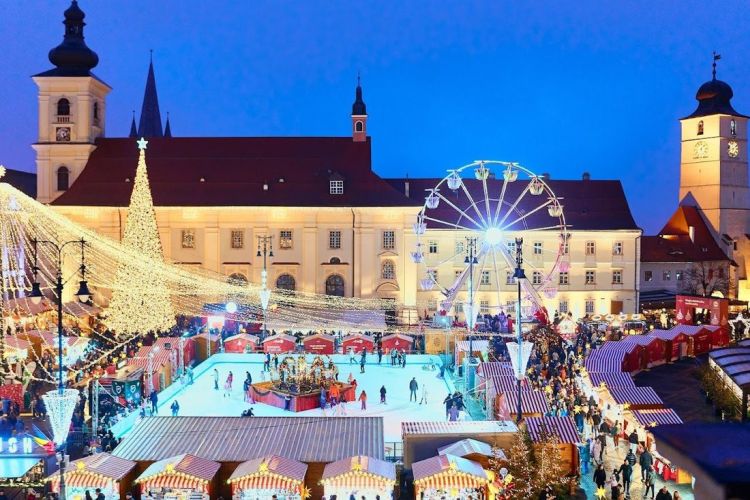
The Sibiu Christmas Market began in 2007, the year the city was European Capital of Culture, and has since developed into one of Romania’s best-known winter attractions. The 2026 edition brings together more than 120 exhibitors from 36 Romanian counties and abroad, with handmade decorations, traditional products, seasonal food and entertainment. Visitors can also enjoy an ice rink, a Ferris wheel and a Christmas-themed area for children. What makes Sibiu particularly appealing is the city’s cultural background: its architecture and history reflect centuries of interaction between Romanian, Saxon and Hungarian communities. This gives the festive setting a distinctly Transylvanian character. The market runs from November 13, 2026, to January 3, 2027.
4. Gdańsk, Poland: Amber, Hanseatic Architecture and Christmas by the Baltic
Gdańsk is one of those European cities that manages to look spectacular without needing much seasonal decoration. Its reconstructed historic center, colorful merchant houses, ornate gates and brick Gothic churches tell the story of a once-powerful Baltic trading port. For centuries, the city belonged to an important network of northern European merchant towns, and its identity remains closely connected to the sea and the amber trade. This is especially fitting at Christmas, when the historic streets host a market that combines festive entertainment with regional crafts and Polish food.
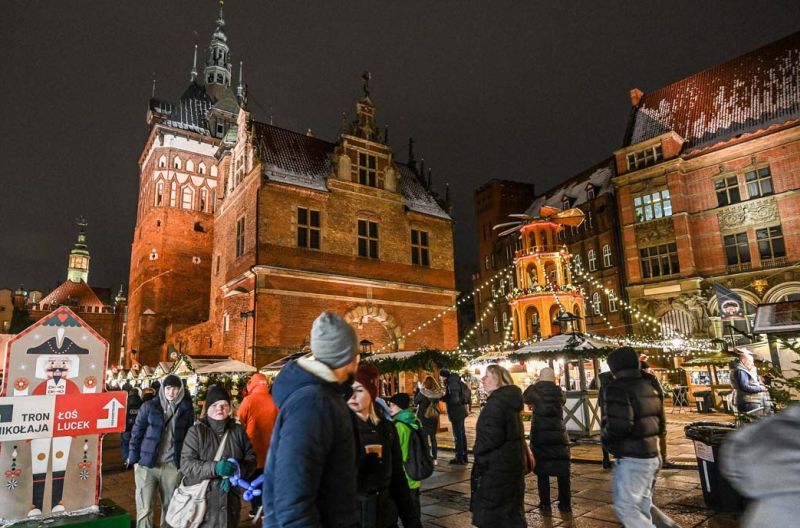
The Gdańsk Christmas Market spreads across several locations, including Targ Węglowy and sections of the Royal Route. One of the best things to look for is amber jewelry, a reminder that this corner of the Baltic has been associated with the precious fossilized resin since antiquity. Food stalls offer traditional Polish specialties, while illuminated decorations and seasonal installations turn the surrounding streets into a festive walking route. The market has also earned international attention, taking first place in an online European Best Destinations Christmas market competition in 2024. Its 2026 edition runs from November 20 to December 23. For American visitors, Gdańsk offers an appealing combination of a photogenic historic center, Baltic atmosphere and a Christmas market with a strong regional identity.
5. Stockholm, Sweden: A Christmas Market Where Traditions Are Still Part of the Show
Scandinavia approaches Christmas with a mixture of practicality, folklore and an appreciation for atmospheric winter evenings. Stockholm’s Skansen Christmas Market is particularly interesting because it takes place inside an open-air museum dedicated to Swedish history and traditional life. Founded in 1903, the market has been bringing together local craftspeople, food producers and visitors for more than a century. Rather than simply decorating a shopping area, Skansen recreates the feeling of a traditional Swedish Christmas, with historic buildings, bonfires, handmade goods and seasonal food.
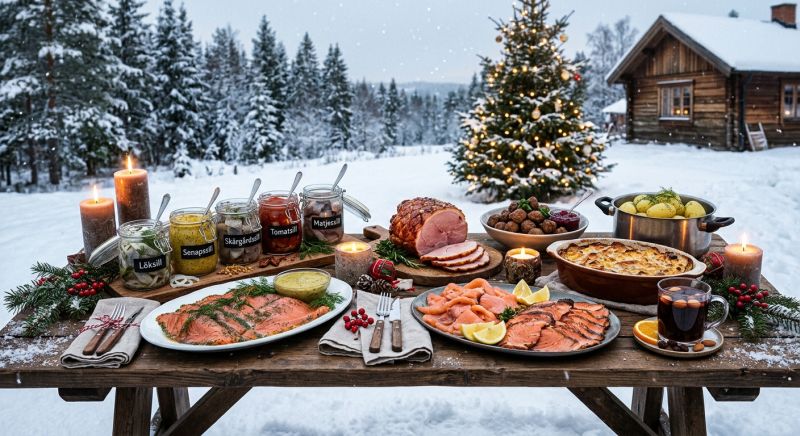
There are several reasons to visit beyond the shopping stalls. Sweden’s Lucia celebrations, held around December 13, are among the most distinctive Nordic Christmas traditions. Girls and boys dressed in white take part in processions, with the leading Lucia figure wearing a crown of candles. Visitors can also discover Swedish festive food, gingerbread, waffles, roasted almonds and glögg, the local version of mulled wine. Dancing around the Christmas tree and traditional music contribute to the atmosphere. The Skansen market operates on Fridays, Saturdays and Sundays from November 27 to December 20, 2026. It is an especially good choice for travelers who want to understand how Christmas is celebrated in Sweden, rather than simply photograph another attractive square.
Official information: Skansen Christmas Market.
6. Riga, Latvia: The City at the Center of Europe’s Christmas Tree Debate
Riga has an interesting claim to Christmas fame, and it involves a rather competitive piece of festive history. Latvia’s capital is often associated with the first decorated Christmas tree, reportedly erected by the Brotherhood of Black Heads in 1510. Tallinn, however, claims an earlier public Christmas tree tradition dating back to 1441. The two cities have turned this historical disagreement into a charming part of their Christmas identity. There may never be a universally accepted winner, but visitors can enjoy the rivalry over a cup of hot mulled wine.
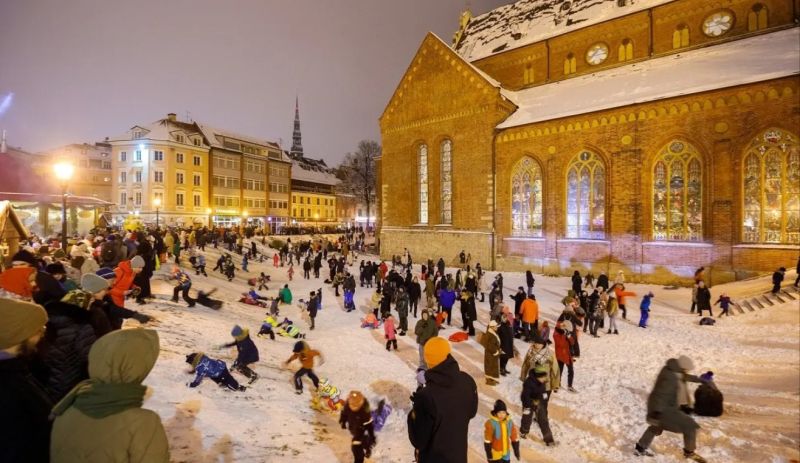
The Riga Christmas Market takes place in Dome Square, surrounded by the atmospheric architecture of the Old Town. The setting combines medieval buildings, ornate churches and narrow streets that are particularly beautiful after dark. Local crafts, woolen accessories, gingerbread and Latvian seasonal food give the market a distinct Baltic flavor. Riga is also an excellent destination for exploring beyond the main square: its Art Nouveau district is one of the most impressive architectural collections in Europe, and the city’s museums and cafés provide plenty of reasons to stay longer. The 2026 market runs from November 27 to January 3, 2027.
7. Vilnius, Lithuania: A Christmas Tree That Becomes a Work of Art
Vilnius has developed a reputation for doing something rather unusual with its Christmas tree: treating it as an annual design project. Instead of repeating the same decorations every year, the Lithuanian capital has experimented with elaborate installations, unconventional shapes and spectacular lighting. Previous editions have included trees that looked more like contemporary art installations than traditional festive decorations. Cathedral Square provides the setting, with its impressive cathedral, historic buildings and Baroque Old Town creating a striking architectural contrast.
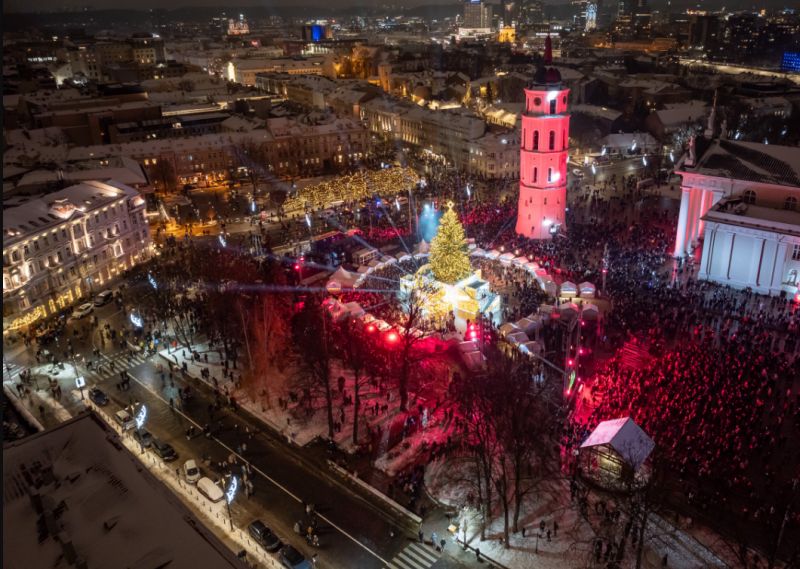
The Christmas Market opens on November 28 and runs until December 27, 2026, while some of the wider festivities, including the Christmas tree and seasonal attractions, continue into January. For visitors interested in local culture, there is also a fascinating Christmas tradition worth understanding. Lithuanian families traditionally gather for Kūčios, the Christmas Eve dinner, where the table includes twelve meatless dishes. These may include fish, mushrooms, grains, dried fruit and kūčiukai, small poppy-seed pastries often served with poppy-seed milk. The tradition has deep cultural roots, blending Christian customs with older Baltic beliefs. It is a reminder that Lithuania’s festive season has a history that extends well beyond its attractive Christmas installations.
8. Wrocław, Poland: Christmas Markets, Colorful Houses and Hundreds of Little Dwarfs
Wrocław’s Market Square is one of the most attractive urban spaces in Poland, with brightly painted historic façades, an impressive Gothic town hall and a lively café culture. During the Christmas season, the square fills with wooden chalets, illuminated decorations, food stalls and festive attractions. The market is large enough to occupy several streets, yet the historic architecture keeps it from feeling like a temporary amusement park dropped into the city center. A brass band traditionally accompanies the opening celebrations, and the season continues through the New Year period.
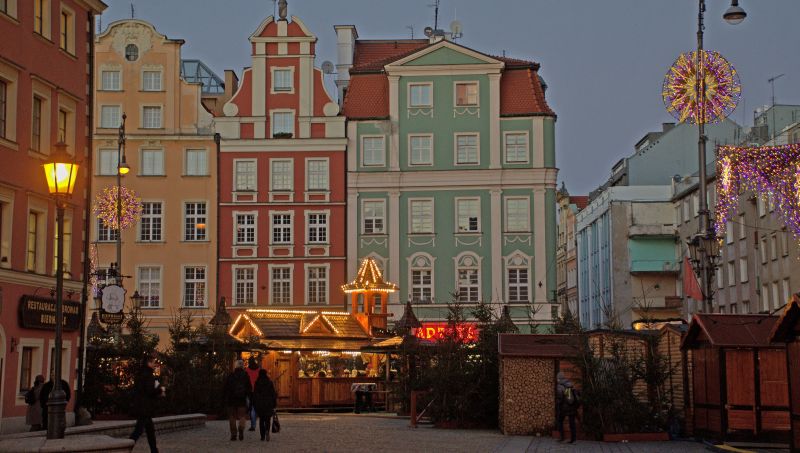
There is another reason to explore Wrocław carefully: the dwarfs. Hundreds of small bronze dwarf figures are scattered around the city, often hidden beside buildings, on pavements and near public squares. These figures have an unusual political background. They originated as a playful reference to the Orange Alternative, an anti-communist movement that used humorous street art and dwarf imagery to challenge the authorities in the 1980s. Today, finding them has become a popular urban treasure hunt, particularly for families. During the Christmas season, the search adds an extra activity between visits to the market stalls. Wrocław’s 2026 market opens on November 20 and continues towards Epiphany in January.
9. Ljubljana, Slovenia: A Riverside Christmas with an Architectural Twist
Ljubljana might not have the international recognition of Prague or Budapest, but its historic center has a distinctive charm that works particularly well during Christmas. The Slovenian capital is compact, walkable and crossed by the Ljubljanica River, whose banks become some of the most attractive festive areas in the city. Bridges, riverside cafés, illuminated trees and stalls selling seasonal food create an atmosphere that feels more integrated into everyday urban life than some of Europe’s enormous Christmas events.
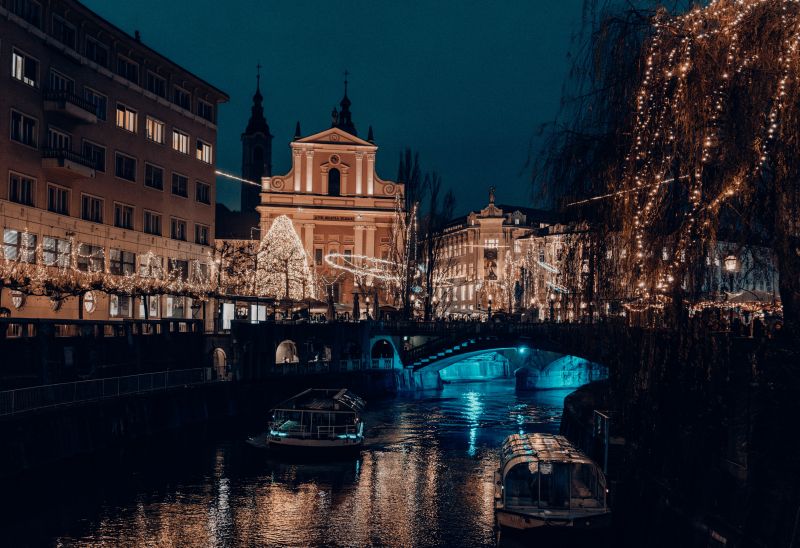
The festive program spreads across several locations, including Prešeren Square, Congress Square and the riverside promenades. Ljubljana is also known for its ambitious Christmas lighting displays, which give the historic center a slightly theatrical quality after dark. Visitors can sample local specialties such as jota, a hearty stew made with sauerkraut or turnips, as well as traditional sweets and warm drinks. The famous Dragon Bridge and the castle above the city provide additional sightseeing opportunities between market visits. The 2026 Christmas markets run from November 27 to January 3, 2027. Ljubljana is an especially good choice for travelers who enjoy exploring cities on foot without spending the entire holiday navigating crowds.
10. Zagreb, Croatia: An Entire City Turns into a Christmas Celebration
Zagreb’s Advent season is best understood as a citywide celebration rather than a single Christmas market. Festive installations, food stalls, concerts and illuminated parks appear across the Croatian capital, creating several different Christmas atmospheres within walking distance of each other. Zrinjevac Park is particularly attractive, with its historic music pavilion, rows of illuminated trees and small wooden stalls. Elsewhere, Ban Jelačić Square becomes one of the main gathering points, while the Upper Town offers a quieter, more intimate setting with historic streets and beautiful views over the city.
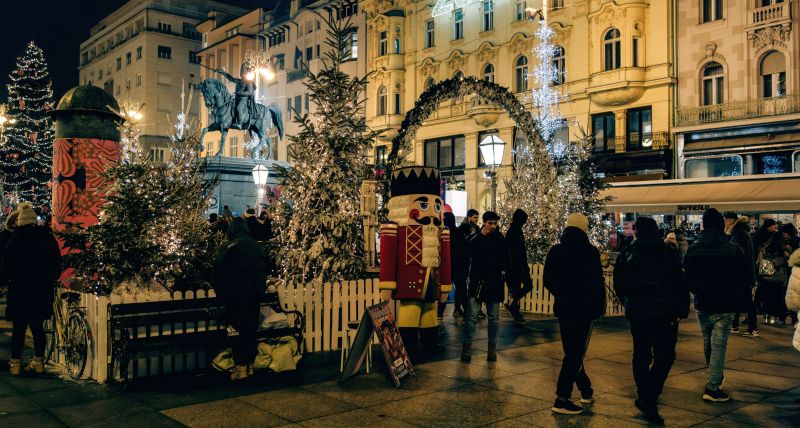
Food is an important part of the experience. Look for fritule, small fried dough balls typically dusted with powdered sugar, alongside sausages, pastries and warming seasonal drinks. Zagreb also has a lively café culture, making it easy to alternate between outdoor festivities and traditional coffeehouses. The city has invested heavily in its Advent program over the years, and the result is a destination that feels particularly festive even beyond the main market areas. The 2026 Advent season officially runs from November 28 to January 7, 2027. It is a particularly interesting option for American visitors who want to combine Christmas activities with museums, architecture and a more substantial urban holiday.
11. Bratislava, Slovakia: A Small Capital with a Generous Christmas Appetite
Bratislava often gets overlooked in favor of nearby Vienna, which is only a short journey away. Yet Slovakia’s capital has a festive atmosphere of its own, especially around Main Square and Hviezdoslav Square. The historic center is compact enough to explore in an afternoon, with colorful façades, narrow streets, churches and views towards Bratislava Castle. Its Christmas markets are smaller than those in some of the larger Central European capitals, but this can be an advantage for visitors who prefer a more relaxed experience.
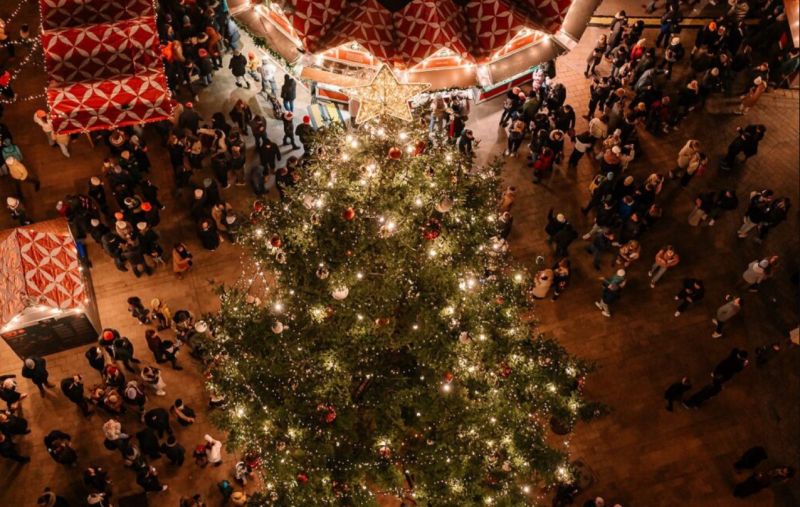
The food deserves particular attention. Traditional Slovak Christmas specialties include kapustnica, a hearty sauerkraut soup often prepared with smoked meat or sausage, alongside potato dishes, pastries and regional sweets. Visitors will also find handmade decorations, candles and seasonal drinks. The market’s Friendly Zone and Christmas Forest add family-oriented activities, while the surrounding streets have plenty of small restaurants and wine bars. The official 2026 markets are scheduled for November 26 to January 3, 2027, with the main locations in Main Square and Hviezdoslav Square. Bratislava makes an excellent addition to a multi-city Central European itinerary, especially for travelers who want to explore beyond the better-known Austrian and Czech destinations.
12. Istanbul, Turkey: The Unexpected Christmas Market in a Predominantly Muslim City
You wouldn’t necessarily expect to find a Christmas market in Istanbul. Turkey is a predominantly Muslim country, Christmas is not a national public holiday, and December 25 passes without the large-scale celebrations associated with much of Europe. Yet, as December approaches, Istanbul begins to embrace a different kind of festive atmosphere. The city, where East meets West in architecture, history and everyday life, has a long-established Christian presence, including Greek Orthodox, Armenian and Catholic communities. Historic churches such as St. Anthony of Padua on Istiklal Avenue still hold Christmas services, while the city’s growing appetite for winter entertainment has brought Christmas-inspired markets and seasonal events into the picture.
One of the most prominent examples is Wonder Village, a large seasonal event that brings together market stalls, entertainment, food, concerts, amusement rides and ice skating. Its 2026 edition moves to Ataköy Marina Arena, where it is scheduled to run from December 11 to 27. This year’s program includes performances, family entertainment and shopping areas, creating a distinctly urban winter festival beside the water. The atmosphere is closer to a modern New Year celebration than a centuries-old Christmas market, but that is precisely what makes it interesting. Istanbul offers a fascinating combination of cultures, spectacular architecture and festive urban energy. For travelers who have already experienced the traditional European Christmas circuit, it provides a rather unexpected way to end the year. Event details are available from the official Istanbul Wonder Village website.
Beyond the Usual Christmas Market Itinerary
Europe’s Christmas markets are often treated as interchangeable seasonal attractions, but these twelve destinations demonstrate how much local history, architecture and cultural identity can influence the experience. A visit to Tallinn is partly a journey into the history of the public Christmas tree. Stockholm offers a glimpse into traditional Swedish celebrations, while Lithuania preserves a Christmas Eve meal shaped by centuries of cultural customs. Valkenburg, meanwhile, has taken the familiar market format underground, and Istanbul has given it an unexpected New Year interpretation.
For American travelers planning a European winter holiday in 2026 or 2027, the most rewarding approach may be to look beyond the obvious capitals. These destinations offer opportunities to discover smaller cultural traditions, regional food and historic neighborhoods while enjoying the festive atmosphere that makes December such a special time to travel.
For more seasonal inspiration, explore TOTE’s previous guide to 15 of the Most Beautiful Christmas Markets in Europe and our selection of 9 Vibrant Christmas Holiday Destinations in Europe.
Editor’s note: Dates refer to the 2026–2027 festive season and are based on available organizer and tourism-board announcements as of November 2, 2026. Individual attractions, opening hours and programs may vary. Check the official event websites before making travel arrangements.
