
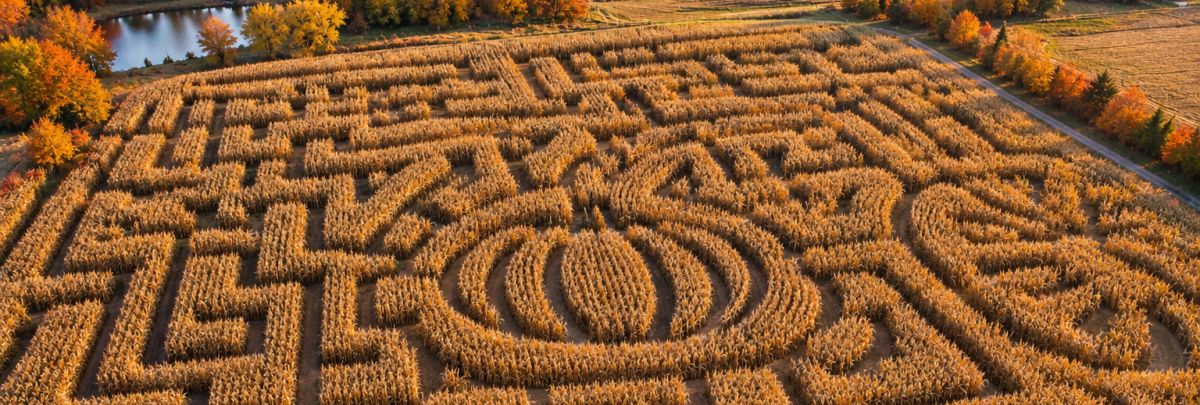
A giant corn maze turns a familiar farm field into an autumn adventure built around curiosity, teamwork, and a mild sense of uncertainty. Towering rows hide the horizon while winding paths make every choice feel significant. For an hour or two, phones stay in pockets, families compare directions, and friends discover who can actually remember the last three turns. That mix of outdoor exploration and playful confusion explains why these seasonal attractions have become fall traditions.
Living Puzzles Carved in Corn
Corn mazes feel immersive because the walls are alive. Dense stalks can rise well above eye level, blocking obvious landmarks and muffling activity on nearby paths. Their appeal also has deeper roots. The history of mazes reaches back to ancient legends and formal garden designs, while the farm version makes the experience accessible and delightfully informal.
When choosing a maze, check its estimated completion time and available activities. A working attraction such as Cherry Crest Adventure Farm pairs its corn maze with seasonal events, farm animals, tractor rides, and play areas, giving families options before or after solving the main puzzle. Arriving early leaves enough daylight to explore without rushing.
Design Secrets Behind Massive Mazes
The best giant corn mazes begin long before autumn. Operators select a field, develop a theme, and translate a drawing into trails that can be cut through growing corn. Modern designers may use GPS-guided equipment to map precise curves, letters, and recognizable pictures across many acres. From ground level, however, those carefully planned images disappear into a web of intersections.

Good designs balance difficulty with momentum. Loops create uncertainty, while checkpoints reassure visitors that they’re making progress. Bridges or elevated platforms can offer a quick view without revealing every answer. Before entering, photograph the map if one is provided and agree on a simple rule for decisions. For example, let a different person choose the direction at each numbered marker so everyone stays involved.
Navigating After Dark
Darkness changes the maze in practical and atmospheric ways. Cornfields became spooky-season classics partly because tall stalks narrow your view and amplify rustling sounds. A route that seems cheerful in afternoon sunlight can feel mysterious once only a flashlight beam defines the path.
Plan for cooler temperatures and uneven ground. Wear closed-toe shoes with reliable traction, carry a flashlight with fresh batteries, and keep children close at intersections. Use marked paths and follow every posted instruction, especially closing times and emergency exit signs. If the attraction offers both family-friendly evening sessions and more intense themed events, confirm which version you’re booking. Anyone uncomfortable with darkness may enjoy a late-afternoon start that finishes around sunset.
The Pure Joy of Getting Lost
A corn maze creates a rare space where taking the wrong turn improves the story. Groups circle back, recognize suspiciously familiar corners, and celebrate when a clue finally makes sense. Part of the appeal is similar to other forms of adventure travel, where navigation, unfamiliar terrain, and the experience of moving through a place become part of the fun. Children can practice decision-making without facing serious consequences, while adults get permission to stop managing every minute of the outing.
Keep the experience light by setting expectations before entering. Choose a shorter route for young children, schedule water and restroom breaks first, and allow more time than the advertised average. If frustration starts building, ask an attendant for a hint or use a designated exit. The goal is shared fun, not a record-setting finish.
The most memorable moment may come after you leave the final row and see the open field again. A warm snack, muddy shoes, and a debate over who caused the longest detour make a fitting end to an autumn escape shaped by corn, confusion, and good company.
