
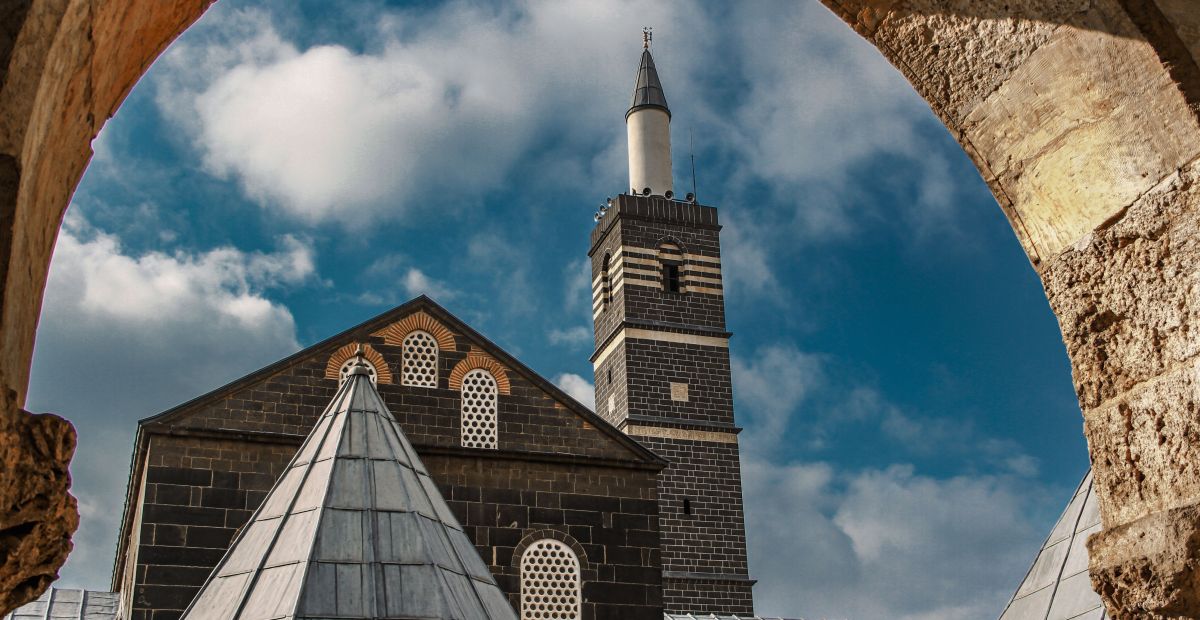
In southeastern Türkiye, a city of black basalt walls, ancient traditions, extraordinary breakfasts and stories passed down through song offers a very different perspective on the country’s history. Welcome to the surprising city of Diyarbakır, where 33 civilisations have left their mark.
In Diyarbakır, breakfast might begin with grilled liver, the streets are lined with buildings made from dark volcanic stone, and a medieval fortress looks out over a river valley that has fed the city for thousands of years. Somewhere in the old quarter, a singer begins a centuries-old Kurdish ballad, carrying a story that has survived long after the people who first told it are gone.
Known to many Kurds as Amed, Diyarbakır sits in Upper Mesopotamia, close to the Tigris River and at the meeting point of several historical and cultural worlds. The official tourism portal of Türkiye describes it as a city bearing the traces of various civilisations, including Assyrians, Urartians, Persians, Romans, Byzantines, Seljuks and Ottomans. This is just one way of expressing its extraordinary historical depth: generation after generation has occupied, rebuilt and reshaped the same landscape.
Yet the most interesting way to discover Diyarbakır is to sit down at a table, order something local and let the city introduce itself.
33 civilisations, one extraordinary historical landscape
Diyarbakır’s location explains much of its importance. Situated in the Upper Tigris basin, in the wider region of the Fertile Crescent, it occupied a strategic position along routes connecting Mesopotamia, Anatolia and the territories further east.
Its ancient name was Amida. The settlement and its surrounding region were significant through Hellenistic, Roman, Sassanid, Byzantine, Islamic and Ottoman periods. Assyrians, Urartians, Medes, Persians, Romans, Byzantines, Marwanids, Seljuks, Artuqids, Ayyubids and Akkoyunlu all belong to the long succession of powers associated with the area.
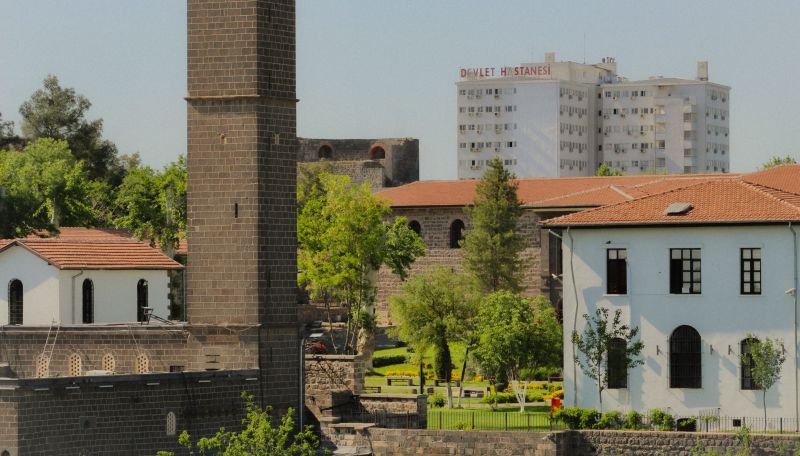
The intriguing part is that these successive cultures did not simply replace one another. They reused buildings, adapted religious spaces, repaired fortifications and left inscriptions on existing structures. The result is a city where different historical periods can sometimes be read in the same building.
First, understand Diyarbakır through its food
The traditional breakfast in Diyarbakır here can involve more than twenty different dishes and ingredients, from regional cheeses and olives to homemade jams, honey, yoghurt, roasted vegetables and eggs prepared with meat. One particularly distinctive speciality is murtuğa, a rich preparation made with flour, butter and eggs. The result is a table that feels closer to a family gathering than a hotel buffet.
And then there is the liver kebab. In Diyarbakır, ciğer kebabı is not reserved for dinner. It is a well-established breakfast tradition. Small pieces of lamb liver are threaded onto skewers, often alternating with tail fat, then grilled over charcoal with salt and spices. It is usually served with bread, fresh vegetables and accompaniments. For visitors accustomed to starting their day with coffee and toast, this is a fairly persuasive argument for changing the routine.
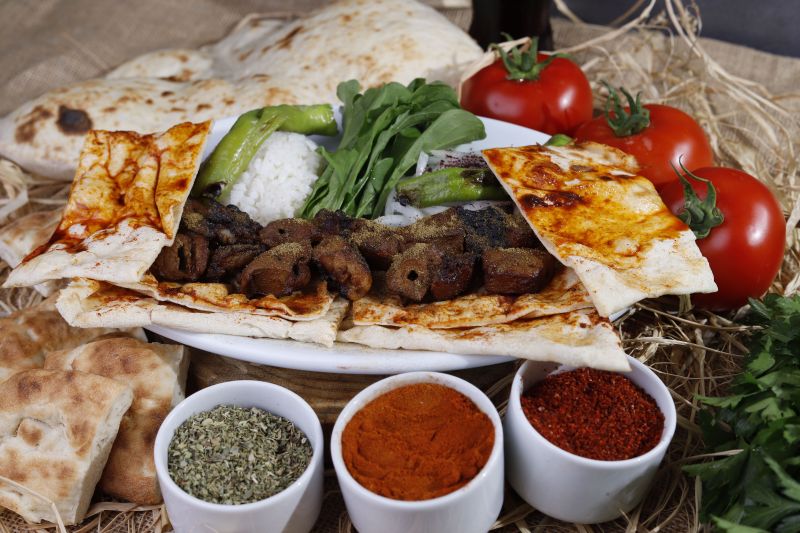
The city’s cuisine also makes generous use of aubergines, meat, bulgur, yoghurt and ingredients that bring a distinctive sourness to dishes. Try meftune, a traditional preparation usually made with meat and vegetables such as aubergines or courgettes, with a characteristic tangy flavour. Other local favourites include stuffed ribs (kaburga dolması), içli köfte and kibe mumbar, a dish made using stuffed intestines.
Do leave room for dessert. Diyarbakır burma kadayıfı is a local speciality with a particularly interesting craft tradition. Thin strands of dough are wrapped around walnuts or pistachios, shaped into rolls, cooked in butter and finished with syrup. Grape molasses helps create the distinctive caramelised colour. The preparation requires considerable skill, traditionally passed from master to apprentice and from one generation to another.
Perhaps the most surprising local food story, however, involves an enormous fruit. Diyarbakır is famous for its watermelons, which have become part of the city’s cultural identity. Historically, growers used pigeon manure collected from specially designed dovecotes, known locally as boranhane, to fertilise the fields. The relationship between pigeons, fertile soil and giant watermelons is a wonderfully unusual example of how agricultural traditions develop around a particular landscape.
Go Türkiye also recounts the traditional Çayda Çıra celebrations, associated with the Hevsel Gardens, when watermelon shells were filled with oil and leaves, set alight and floated on the Tigris. Imagine the river dotted with tiny floating lights. It is the sort of local story that makes you realise how little a food guide can tell you about the culture behind a dish.
Dengbêjs: The people who keep history alive through song
There is another way to understand Diyarbakır that has nothing to do with museums or monuments. It involves listening.
The dengbêj tradition is one of the most remarkable expressions of Kurdish oral culture. The word combines deng, meaning voice or sound, with bêj, meaning to tell or say. Dengbêjs are singer-storytellers who preserve and perform long narratives, often without musical instruments.
Their songs, known as kilam or stran, tell stories of love, loss, migration, conflict, family, heroes and historical events. In societies where memories were often transmitted orally rather than through written records, these performers became important keepers of collective memory.
One fascinating detail is their performance technique: a dengbêj may place a hand over an ear while singing. This helps the performer hear and control their own voice. The result is often an intensely expressive performance, somewhere between storytelling, poetry and music.
Visitors can experience this tradition at the Dengbêj House in the historic Sur district. Rather than being presented as a museum exhibit, the tradition is kept alive through actual performances and encounters with the singers. It is an excellent reminder that Diyarbakır’s heritage is not confined to what has been built in stone.
The black walls that hold centuries of stories
One of the first things you notice in Diyarbakır is the colour of its architecture. The city is famous for its dark basalt stone, a volcanic rock that gives streets, houses, mosques and fortifications a distinctive appearance.
The most impressive example is the Diyarbakır Fortress, whose walls surround much of the historic centre. Stretching approximately 5.8 kilometres, the fortifications are among the most remarkable surviving examples of defensive architecture in the region.
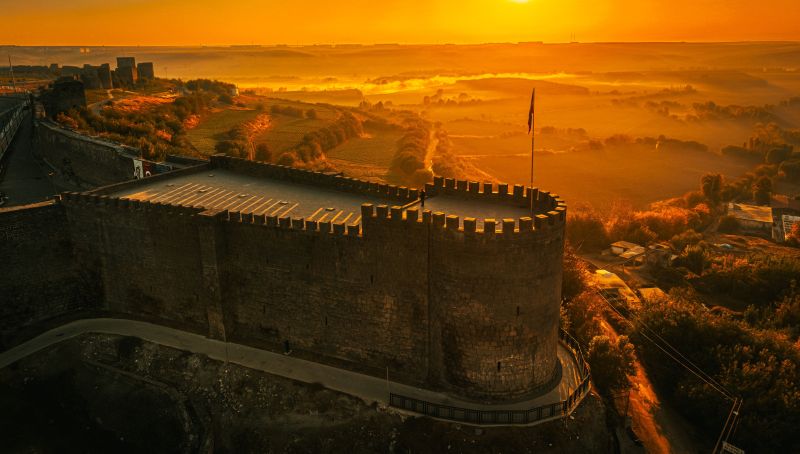
But their size is only part of the story. UNESCO records 63 inscriptions from different historical periods on the walls. They are not merely defensive structures; they are an archive in stone, documenting successive rulers, building campaigns, repairs and changes in political power.
The fortifications contain numerous towers, gates and supporting structures. Some sections date back to the Roman period, while others reflect later construction and restoration. Looking closely, you can see how the same strategic structure was adapted by different generations to suit their needs.
The fortress was inscribed on the UNESCO World Heritage List in 2015, together with the Hevsel Gardens and their surrounding cultural landscape. UNESCO recognised not just an impressive military construction, but the relationship between a historic city, its river and the agricultural land that made urban life possible.
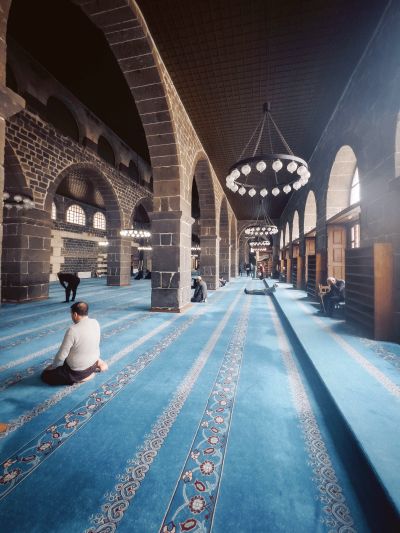 A mosque that began as a church, and a minaret with four legs
Religious architecture provides another way to follow Diyarbakır’s changing history.
The Great Mosque of Diyarbakır (Ulu Camii) is one of the oldest surviving mosques in Anatolia. Its history is particularly interesting: after Muslim armies took the city in 639, the former Mar-Tama church, described by the Turkish Ministry of Culture and Tourism as the city’s largest Christian temple, was converted into a mosque.
The building was subsequently repaired and reconstructed, including major work in 1091 under the Seljuk ruler Malik-Shah. Its courtyard, black stone construction and inscriptions reflect the contributions of several periods. It is not simply an Islamic monument; it is also a physical reminder of how religious spaces can acquire new meanings over time.
Another landmark is the Four-Legged Minaret (Dört Ayaklı Minare), part of the Sheikh Matar Mosque. Built in 1500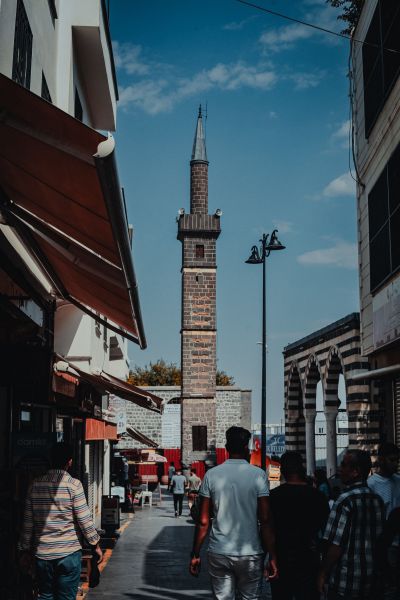 under the Akkoyunlu ruler Kasım, it stands on four stone columns, creating an architectural form that is unusual enough to stop almost anyone walking past.
A popular local belief says that passing between its four supports seven times will make a wish come true. Whether or not you believe in the tradition, it adds a playful detail to an otherwise serious piece of architecture.
The city also preserves a long Syriac Christian presence. The Church of Saint Mary, associated with the Syriac Orthodox community, has origins traditionally traced to the sixth century. Its Byzantine elements, historic doors and religious artworks offer another perspective on Diyarbakır’s multicultural past.
There is, however, an important contemporary chapter in the history of Sur, the old walled district. The armed conflict of 2015–2016 caused substantial destruction and displacement in parts of the historic neighbourhoods, followed by extensive redevelopment. The district you visit today should not be mistaken for an entirely untouched medieval town. Its heritage is impressive, but its recent history is also part of its identity.
Hevsel Gardens: How a city fed itself for centuries
From the fortress walls, look down towards the Tigris. Below the stone ramparts lies a surprisingly green landscape: the Hevsel Gardens.
These fertile gardens have historically connected the city to the river, supplying food and water to its inhabitants. Their importance is central to the UNESCO designation because they demonstrate that Diyarbakır’s development depended on more than military strength or trade. It also depended on a functioning agricultural landscape.
The gardens are a particularly interesting example of the relationship between an ancient urban centre and its natural environment. They were not decorative grounds created to improve a view. They were productive land, woven into everyday life through generations of cultivation.
The river, gardens and fortress together form a cultural landscape that is much more meaningful than any one monument. It is worth spending some time observing this relationship from the viewpoints along the walls, particularly in the softer light of late afternoon.
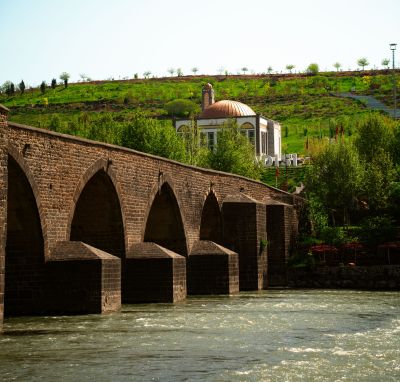 The Ten-Eyed Bridge and the Tigris
One of the best places to appreciate the scale of the landscape is the Ten-Eyed Bridge (On Gözlü Köprü), a medieval stone bridge spanning the Tigris.
Built in 1065 during the Marwanid period, it is named after its ten arches. Its position in the river valley makes it a particularly photogenic landmark, but the bridge also tells a practical story. It was part of the infrastructure that connected settlements and commercial routes across a difficult landscape.
Today, it is a popular place for locals to gather, drink tea and spend time by the river. That contrast is worth noticing: a structure built for medieval travel has become part of contemporary social life.
Rather than rushing through for a photograph, take a moment to observe how people use the space. In Diyarbakır, historical places are often still woven into ordinary routines.
Beyond Diyarbakır: A Roman mystery cult
Travellers who have an extra day should look beyond the city itself. The surrounding province contains some remarkable archaeological sites.
Zerzevan Castle, located in Çınar district, is probably the most unusual excursion. It was a Roman military settlement strategically positioned along an ancient route connecting Amida with other important cities in the region.
Its greatest archaeological surprise is an underground sanctuary dedicated to Mithras, a deity associated with a mysterious religion practised in parts of the Roman Empire, particularly among soldiers. Mithraism involved initiation and secret rituals, and its followers gathered in enclosed temple spaces known as mithraea.
The sanctuary discovered at Zerzevan dates to the second or third century AD and is considered an exceptionally important example of the cult on Rome’s eastern frontier. The site is on UNESCO’s Tentative List, and its archaeological importance continues to attract attention.
Another worthwhile excursion is the Malabadi Bridge, a spectacular medieval stone structure associated with the Artuqid period. Its monumental arch and setting make it one of the region’s most memorable engineering landmarks.
For a different landscape, visit Eğil, a historic town surrounded by dramatic rock formations and the waters of the Tigris reservoir. It offers a combination of archaeological remains, religious history and striking scenery.
How to visit Diyarbakır: Practical travel tips
When to go: Spring and autumn are the most comfortable seasons for exploring. April, May, October and November are particularly attractive choices. Summers can be extremely hot in southeastern Türkiye, making long walks along the walls and outdoor archaeological visits less enjoyable. September is interesting for travellers curious about the watermelon harvest and local traditions.
How long to stay: Allow at least two full days for Diyarbakır itself. Three or four days are better if you want to visit Zerzevan Castle, Malabadi Bridge or Eğil without rushing.
Getting there: Diyarbakır has its own airport, with domestic connections. Flights via Istanbul or other major Turkish hubs are worth checking when planning your trip. The airport is approximately 10 kilometres from the city centre, and transport options include municipal buses and taxis. Check the official airport transport information for current details.
Where to stay: Accommodation around Sur or within easy reach of the historic centre makes sightseeing easier. Staying close to the old city also means you can explore its streets early in the morning and return for dinner without depending on transport.
Getting around: The historic centre is best explored on foot. Wear comfortable shoes, as stone streets and uneven surfaces are common. For sites outside the centre, arrange a taxi, local transport or a guided excursion.
What to eat: Make time for a traditional breakfast, try ciğer kebabı, order meftune and finish with burma kadayıf. September is a particularly interesting month for anyone curious about the city’s watermelon traditions.
Photography and local customs: When in Diyarbakır, Turkey, you should ask before photographing people, especially performers and visitors in religious spaces. Dress respectfully when entering mosques and churches, and check opening arrangements for smaller heritage sites before travelling across the province.
Safety: Check your government’s latest travel advice shortly before departure, particularly given the wider regional situation. As of November 2026, the UK Foreign, Commonwealth & Development Office advises against travel within 10 kilometres of the Syrian border. This is a specific border-area warning, not the same as a blanket warning against visiting Diyarbakır city. Regional conditions and individual government recommendations can change, so check the latest guidance and your travel insurance conditions.
Diyarbakır is a destination best approached with curiosity and enough time to listen, taste and look closely. For more journeys into places with unusual histories in Turkey, distinctive cultures and stories beyond the standard tourist itinerary, explore more articles on Tourism on the Edge.
