
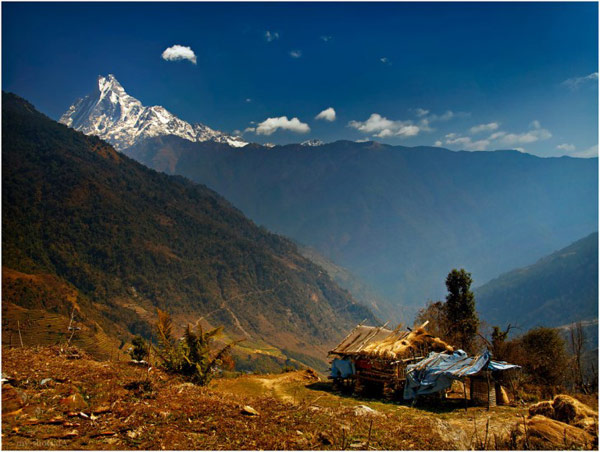
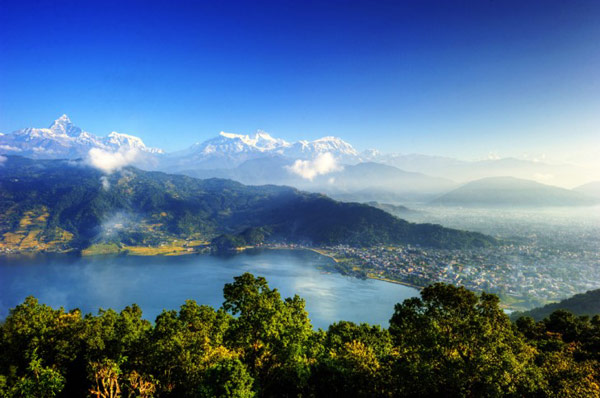
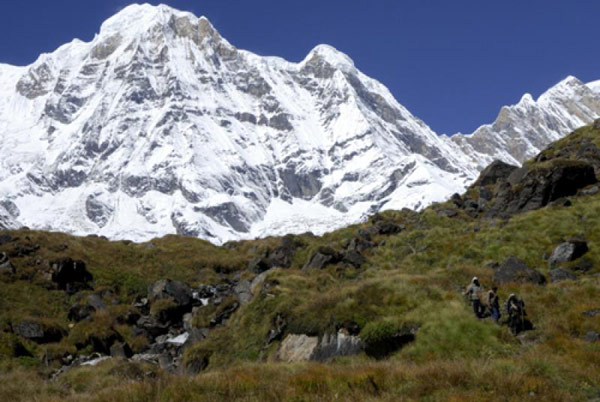
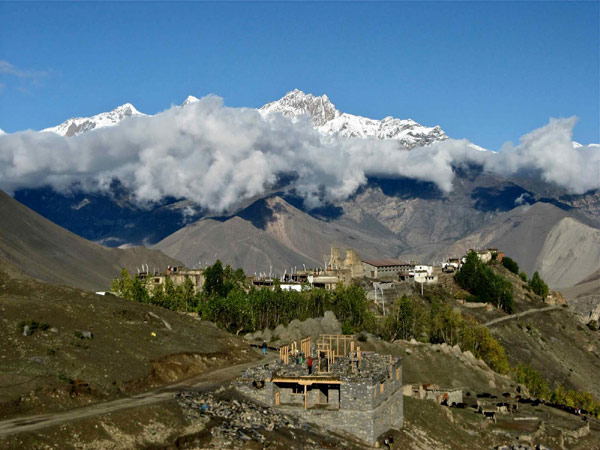
Annapurna is a scenic mountain section in Nepal, home to thirteen peaks over 7000 meters ((22,970 ft) and to Annapurna I summit, with its 8,091 meters (26,545 ft). Hiking, trekking and climbing in Annapurna go back a few decades.
[adsenseyu2]
The first expedition successfully reaching Annapurna I in 1950 was led by Maurice Herzog. The conquest was a world record for three years, for the highest summit attained on Earth, until the first successful ascent of Mount Everest in 1953. Fast forward to present times, trekking is possible in Annapurna, Nepal in Annapurna Conservation Area, with three major trekking routes calling out for adventure travelers everywhere.
The beautiful town of Pokhara is recommended as a starting point for all of these three mountain treks (the Jomson Trek to Jomsom and Muktinath- sadly disturbed by a road-building project, the Annapurna Sanctuary route to Annapurna base camp and the Annapurna Circuit), as well as for other smaller climbing expeditions.

Being the second largest city in Nepal, Pokhara is relatively easy to reach. Surrounded by the Himalayas and packed full with travelers and tourists, the city can take pride in having three of the ten highest mountain peaks in the world (Dhaulagiri, Annapurna I and Manaslu or Lamjung himal ) at a “walking” distance. Check out this post where we put together important information about how to plan the memorable Manaslu Trek.

[adsenseyu2]
